

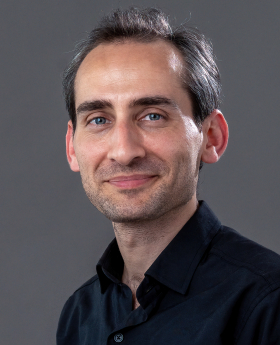
PERSONAL DETAILS:
Name: Dr. Modar Ali, Ph.D.
Place and Date of Birth: Tartous, Syria, 19th of April
1988
Citizenship: Syrian
Occupation: Senior Lecturer,
University of Pécs (UP), Hungary, Faculty of Engineering and Information
Technology (FEIT), Institute of Architecture, Department of Building
Construction and Energy Design
Qualification: Master's in Architecture (M.Sc.) (2018)
Academic Degree: Doctoral
Degree (Ph.D.) (2024)
E-mail: ali.modar@mik.pte.hu
List of All Publications: https://english.mik.pte.hu/profilhttps://m2.mtmt.hu/gui2/?type=authors&mode=browse&sel=authors10070668 (at Hungarian National Scientific
Bibliography, MTMT)
MTMT ID: 10070668
ORCid ID: 0000-0001-9585-2684
Scopus Author ID: 57225927692
LANGUAGE SKILLS:
Arabic:
Native language
English: C1
German: B2
Hungarian: A2
EDUCATIONAL CAREER:
2025 – Assistant professor at
the University of Pécs Faculty of Engineering and Information Technology, Pécs,
Department of Building Constructions and Energy Design
2023 – 2025 Assistant lecturer at the
University of Pécs Faculty of Engineering and Information Technology, Pécs,
Department of Building Constructions and Energy Design
2022 – 2023 Doctoral work at the faculty at the University of Pécs,
Pollack Mihály Faculty of Engineering, Institute of Architecture, Department of
Building Structures and Energy Design
PARTICIPATION IN RESEARCH PROJECTS:
2023: Baseline study of community energy
in the EU
2018 - 2019 Solar Decathlon
Europe 19, Szentendre, Hungary
2020 - 2021 Solar
Decathlon Europe 20/21, Wuppertal, Germany
TEACHING/GUEST LECTURING ABROAD:
2025.05. CEEPUS teaching mobility program
- 10th International Summer School on Sustainable Buildings for Europe, University
of Applied Sciences Burgenland, Austria
2024.04. Erasmus+ Staff Mobility Program– Visiting the Faculty of Civil
Engineering and Architecture Osijek University
in Croatia
Participation and presenting at international scientific
conferences:
· The International Conference on Challenges for the Next Generation Built Environment (NEXTBUILT), 04 –05 June 2026, Bologna, Italy
·
3rd Conference on Future Challenges
in Sustainable Urban Planning & Territorial Management, 20-22 January 2026,
Cartagena, Spain (online).
·
Urban
Planning
& Architectural Design for Sustainable Development (UPADSD), 21–23 October
2025, Florence, Italy.
·
6th Euro-Mediterranean
Journal for Environmental Integration, 15-18 May 2024, Marrakesh, Morocco
(online).
·
4th International Conference on
Environmental Design (ICED2023), 20-22 October 2023, Athens, Greece.
·
5th Euro-Mediterranean
Journal for Environmental Integration, 2-5 October 2023, Rende, Italy (online).
·
8th International Building Physics
Conference (IBPC 2021), 25-27 August 2021, Copenhagen, Denmark (online).
·
International Conference on
Vernacular Architecture in World Heritage Sites. Risks and New Technologies
(HERITAGE2020), 9-11 September 2020, Valencia, Spain.
1. Aitzhan A, Ali M. Simulation-based investigation of bio-based thermal
insulation materials for continental climate. Int Rev Appl Sci Eng.
2026;1(aop). doi:10.1556/1848.2026.01280
2. Ali M, Kistelegdi I. Comparative Simulation Study of Lightweight and Brick
Structures for Passive Refurbishment of Typical Cube Houses. In: Third
International Conference on Future Challenges in Sustainable Urban Planning
& Territorial Management. Cartagena: Universidad Politécnica de
Cartagena; 2026:395. doi:10.31428/10317/24227
3. Bonjar MRG, Ali M, Kistelegdi I, Javad GB. Climate-Optimization Through a
Modular System of Family House Buildings in a Temperate Climate. In: Nagy B,
Szalay Z, eds. Proceedings of CESBP 2025 - 6th Central European Symposium on
Building Physics. CESBP 2025. Lecture Notes in Civil Engineering, Vol 796.
Springer, Cham; 2026:153-163. doi:10.1007/978-3-032-14019-7_11
4. Juhász H, Kondor T, Ali M. Secondary building skin – Energy envelope. Pollack
Period. 2025;20(3):158–165. doi:10.1556/606.2024.01265
5. Suleiman B, Qasseer O, Ali M, et al. Awareness of Green Architecture
Importance Among Post and Undergraduate Syrian Students of Architecture and
Civil Engineering. Sustain Clim Chang. 2024;17(5):325-338. doi:10.1089/SCC.2024.0112/ASSET/SCC.2024.0112.FP.PNG_V03
6. Ali M. Enhancing Natural Ventilation in Family House Buildings in Hungary
by Integrating Passive Air Conduction Systems. 2024.http://pea.lib.pte.hu/handle/pea/44654. Accessed May 22,
2025.
7. Ali M, Kistelegdi I. CFD Investigation of Enhancing Natural Ventilation in
Attached Family House Buildings in Hungary. In: E3S Web of Conferences.
Vol 436. Athens: EDP Sciences; 2023:01004. doi:10.1051/E3SCONF/202343601004
8. Ali M, Katona ÁL, Kistelegdi I. CFD Investigation of Natural Ventilation
in a Family House in Hungary. In: Journal of Physics: Conference Series.
Vol 2069. Copenhagen: IOP Publishing; 2021:012095. doi:10.1088/1742-6596/2069/1/012095
9. Ali M, Kistelegdi I. “Cube House” Refurbishment in Hungary – A
Simulation-based Approach. Pollack Period. 2021;16(2):156-162. doi:10.1556/606.2021.00271
10. Ibrahim S, Ali M, Baranyai B, Kistelegdi I. Simulation-Based Analysis of
Earthen Heritage Architecture as Responsive Refugee Shelters (Case Study: Domes of
Northern Syria). Int Arch Photogramm Remote Sens Spat Inf Sci.
2020;XLIV-M-1-2(M-1):365-372. doi:10.5194/ISPRS-ARCHIVES-XLIV-M-1-2020-365-2020